Envision
Envision GCTOS: A Unified Digital Platform for Managing Mixed-Cargo and General Cargo Terminal Operations
.webp)
Table of Content
1. Introduction
2. The Strategic Imperative of Digitalization in General Cargo Terminals
3. Mastering the Complexity of Mixed-Cargo Operations
4. Unified Workflows for Container and General Cargo Management
5. Interoperability: A Core Requirement for Modern Port Ecosystems
6. Advancements in General Cargo Terminal Software Technology
7. Purpose-Built Excellence in Mixed-Cargo Operations
8. Decision-Making Powered by Advanced Operational Intelligence
9. Future-Ready Terminal Operations with Envision GCTOS
10. Conclusion
Introduction
The increased cargo diversity and throughput expectations witnessed in the world maritime sector is a phenomenon that brought port operation to a new complex era. The contemporary terminals must be capable of dealing with a wide disparate of cargo types such as containers and steel coils as well as project cargo, RoRo unit, timber and palletized goods whilst ensuring competitive turnaround times and unswerving safety standards. The conventional distinction between container terminals and multipurpose terminals is no longer visible, and most ports are currently having hybrid environments that require coordinated workflows, integrated visibility, and smart decision-making. Even small in-efficiencies in such an environment would trickle down to significant operational failures, loss of money and dis-satisfaction by customers.
Envision General Cargo Terminal Operating System (Envision GCTOS) is one of the specialized solutions that were created to accommodate this change in operations. It enables mixed-cargo terminals to have a single digital ecosystem that provides a platform that combines container operations and general cargo activities in a single platform. Being built to enable complete operational visibility, advanced planning, and real-time execution control, Envision GCTOS is an instrument that will enable the workforce of terminal operators, port authorities, logistics specialists, and scientists to cope with the complexity inherent in modern cargo management. It is a future ready platform designed to provide decision makers with accuracy, speed, safety and scalability in a more competitive global environment.
The Strategic Imperative of Digitalization in General Cargo Terminals
General cargo terminals face unique challenges that differ significantly from container-only facilities. Unlike containers - which follow standardizedhandling, stacking, and documentation processes—general cargo involves irregular shapes, variable weights, specialized rigging needs, and diverse packaging formats. The introduction of project cargo, breakbulk shipments, or heavy-lift equipment into the mix adds further unpredictability to daily planning. Traditional manual processes cannot keep pace with these demands, and legacy terminal software often lacks the ability to adapt to such variability.
Digitalization has there fore become a strategic priority for ports managing mixed cargo. Terminal stakeholders now require real-time data visibility, automated documentation, predictive planning tools, transparent billing processes, and seamless system interoperability. Customers increasingly expect digital notifications, live cargo tracking, and faster turnaround times. Regulatory bodies demand compliance through digital processes and accurate reporting. Without an intelligent digital foundation, operational fragmentation, yard congestion, equipment downtime, and revenue leakage become inevitable.
Envision GCTOS addresses this strategic need by delivering a comprehensive, unified platform that combines real-time operational control with automated workflows and deep analytical insights. It provides terminals with a future-ready operational backbone capable of adapting to unpredictable daily realities while supporting long-term strategic growth.
Mastering the Complexity of Mixed-Cargo Operations
Mixed-cargo terminals have to sail through the channel of diversity of operations that is way beyond level of standard container operations. Every type of general cargo presents special handling and storage needs. An example is steel coils whichshould be positioned with care in warehouses or yard areas that are allowed to bear their weight, they need to be lifted carefully using special lifting equipment. Project cargo needs tailor-made stowage schedules and unique lifting schedules. Ro-Ro units require regulated movement roads, coordination of drivers and monitoring of safety. Timber and palletized products are to be kept in well-ventilated spaces or staging positions, which do not cause damage.
When such different types of cargo are present in the same terminal with container operations, the complexity is further added. Terminal managers have a constant review of the availability of yard space, equipment match, labor distribution and vessel schedule. Lack of integrated system may result in data inconsistencies and communication disconnection, thus leading to rehandling, damage to cargo, in effective use of resources, or delays in vessel turnaround.
Envision GCTOS introduces this environment to sanity through advanced handling logic that is specific to a type of cargo. It allows the dynamic space allocation of the yard according to the sizes and weight as well as the handling needs of the cargo in order to guarantee optimal use of space. The system also assists automated equipment scheduling and optimizes the availability of machinery with the operational needs to minimize waste of time and facilitate predictable workflow process. By monitoring all cargo items every time they enter the gate and continuously updating on their position and status, Envision will offer a high degree of risk reduction in operations and a terminal capable of ful-filling even the highest expectations of service level.
Unified Workflows for Container and General Cargo Management
One of the greatest operational challenges for mixed-cargo terminals is the separation of container systems and general cargo workflows. This fragmentation leads to redundant data entry, inconsistent planning, and limited visibility across cargo types. Vessel planning becomes slow and manual, yard planning becomes error-prone, and billing becomes susceptible to discrepancies.
Envision GCTOS eliminates these silos by delivering a unified operational environment that seamlessly integrates container and general cargo activities. Vessel operations are managed in a single planning inter face that in corporates cargo-specific constraints, stowage rules, and equipment availability. Yard plans can be executed with real-time awareness of both container stacks and general cargo layouts, enabling smarter decision-making during high-pressure operational windows.
The unification extends to billing as well. Envision automates tariff application based on cargo type, weight, volume, storage duration, handling method, and value-added services. Because every operational action is tracked digitally, invoicing becomes transparent, accurate, and fully auditable. Decision-makers no longer need to re-concile data from separate systems; instead, operational and commercial workflows co-exist harmoniously within one platform.
Interoperability: A Core Requirement for Modern Port Ecosystems
Contemporary ports are digital ecosystems instead of operating silos. Terminals need to communicate in real time with port community systems, customs authorities, ERPsystems, financial application, logistics service providers, weigh bridge systems, and IoT networks. The lack of powerful inter operability functions means that operational delays, compliance issues, and data bottlenecks will occur.
Interoperability is at the core of the design of envision GCTOS. It is compatible with modern APIs, EDI messages and the standards like EDIFACT, XML, and newer smart-port integration protocols. This makes communication with port community platforms easy on the vessel scheduling, customs clearance, submitting of manifests, and regulatory reporting. ERP systems can be integrated to enable real time synchronization of financial information without involving manual reconciliation and enhancing cost control.
IoT integration incorporates a lot of operational value. Envision gathers real-time information on cranes, fork lifts, sensors, cameras, and weigh bridges to deliver it into predictive analytics engines that assist in reducing downtime of equipment, enhancing safety, and performance optimization. Moreover, the system facilitates the digital documentation processes, where terminals are switching the paper-based processes to electronic cargo receipts, digital checklists, and mobile workforce management.
This interoperability is what makes Envision GCTOS not just a single platform operating independently, but a smart backbone of the whole port system.
Advancements in General Cargo Terminal Software Technology
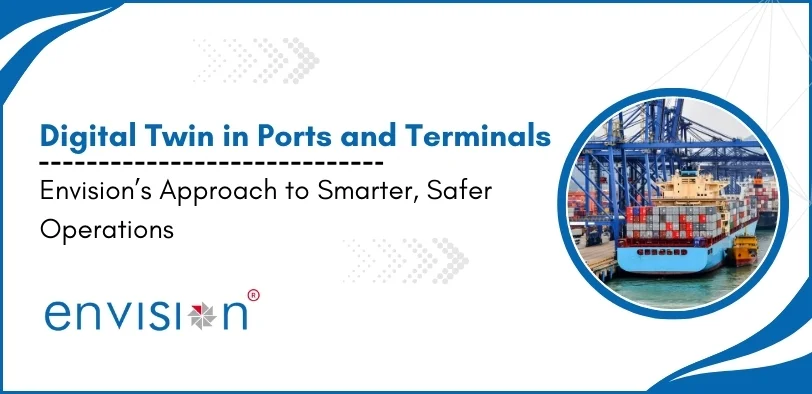
The potential of the terminal operating systems has been transformed radically through technological advances. Digital twins, artificial intelligence, mobile computing, cloud technologies, and automated gate systems have become the key elements in the modernization of the general cargo operations.
Envision GCTOS takes advantage of AI in order to optimize yard planning, minimize re-handling, and prescribe the most effective placement strategies of different types of cargo. The machine learning models examine the past trends and forecast the congestions, equipment requirements and productivity of vessels. Digital twin technology enables the terminal managers to visualize the yard activity, model the vessel calls and test the operational conditions before hand to minimize risk and enhance the accuracy of the planning.
Automation of the gates such as optical character recognition and automated cargo inspections help in a great way to shorten the truck processing time.Mobile-enabled applications can expand visibility of field operators who areable to document lifting activity, immediate cargo tracking, monitor safety measures and get real-time instructions on hand held devices. Cloud-native deployment offers scalability, high availability, and disaster recovery, which will ensure that Envision will be able to serve both mid-size facilities and large-scale multi purpose ports.
Purpose-Built Excellence in Mixed-Cargo Operations
Envision GCTOS is unique because it is designed specifically to support mixed cargo terminals in stead of being based on container-only systems. Each element, such as vessel planning, yard allocation, billing, etc., is aimed at cargo diversity and operational uncertainty.
The system combines the vessel stowage planning with breakbulk, project cargo, and container and it ensures it meets safety standards and the potential of the equipment. Real-time data is used to dynamically optimize yard allocation, which helps to alleviate congestion and reduce the unnecessary traffic of cargo. Equipment planning is taken care of to make sure that cranes, SPMTs,fork lifts and reach stackers are used effectively without over loading the operators or idle time.
Envision ensures full financial transparency by ensuring that operational events are directly associated with billing. The automated notifications enhance the communication with shipping agents, forwarders, and truck operators. Reporting dashboards enable decision-makers to understand the real-time use of yards,equipment availability, vessel performance, and cargo dwell behavior. This integration provides an efficient optimized flow of operations which is unparalleled over the multipurpose terminal environment.
Decision-Making Powered by Advanced Operational Intelligence
Data-driven decision-making is essential for modern terminal operations. Envision GCTOS provides deep analytical intelligence that allows managers to anticipate issues before they occur and address them pro-actively. Dashboards display real-time yard occupancy, equipment workload, vessel progress, and gate traffic. Predictive analytics identify potential operational bottlenecks, enabling managers to reallocate resources or adjust planning strategies.
Automated reporting ensures transparency for customers and compliance authorities, strengthening trust and operational accountability. By consolidating all information into a single unified data environment, Envision empowers decision-makers to shift from reactive to strategic operational management.
Future-Ready Terminal Operations with Envision GCTOS
With the increasingly dynamic and competitive global trade, terminals have to embrace systems in which they can easily scale, cut on costs, and enhance security. Envision GCTOS offers the building block of operations of tomorrow. Its scale based architecture, AI based optimization, automated workflows and real time intelligence minimize over heads in operations and maximize throughput and customer satisfaction.
The decision to invest in Envision is not only the technological one, but the strategic one to become able to stay on the path of operation stability and commercial success in long-term. Having unified workflows, interoperability and highly developed analytical functions, Envision enables terminals to address the increased needs of mixed-cargo activities.
Conclusion
Mixed-cargo terminals have become the leading frontier of the operational complexity in international trade. They need an innovative, smart and cohesive terminal operating system that is capable of handling different types of cargo accurately and efficiently to compete with others. The attempt to visualize General Cargo Terminal Operating System provides precisely that an innovative platform that will turn the operational issues into a predictable, manageable, and optimized process. Envision GCTOS can provide decision-makers with a clear road to operational excellence and sustainable development in an ever-complicated maritime ecosystem, where there are unified workflows, complete interoperability, AI-driven intelligence, and deep industry specialization.
Contact Us to See How Envision GCTOS Transforms Mixed-Cargo Complexity into Controlled, Intelligent Operations
Talk to us today to know how our solutions can accelerate your digital transformation
Let's Talk



.webp)
.webp)
.webp)
.webp)


%20ver1_1.webp)


.webp)
.png)
.png)