Envision
General Cargo Terminal Operating System for Integrated Container and Mixed Cargo Operations
Table of Content
1. Introduction
2. Challenges in Mixed Cargo Terminal Operations
3. Unified Container and General Cargo Workflow Framework
4. Interoperability with Existing Port Systems
5. Advanced Yard and Resource Management
6. Operational Intelligence and Predictive Analytics
7. Billing Automationand Financial Accuracy
8. Digital Transformation and Future-Readiness
9. Safety, Compliance,and Environmental Considerations
10. Implementation Strategy and ROI
11. Conclusion
Introduction
The mixed and general cargo terminals are situated in one of the most complicated working conditions of the maritime industry. General cargo terminals process a very diverse range of cargo- breakbulk and project cargo, steel, RoRo, palletized, timber and containers- each have different handling, storage, safety and compliance needs compared to container terminals which operate in standard and predictable workflows. This is even more complicated with the presence of both containerized and non-containerized cargo business in the same terminal that generates huge pressure on yard planning, vessel scheduling, equipment utilization, documentation and billing processes.
Conventional dependence of fragmented systems, manual processes, and siloed software platforms restrict the visibility of operations and provide slow decision-making, which frequently leads to congestion, rehandling, delays, safety risks, and revenue leakage. With the increase in cargo volumes and increasing stakeholder demands, the terminals can no longer afford to use reactive management strategies. It has become evident that there is an immediate and urgent necessity to have a single, smart operating framework capable of dealing with both mixed-cargo variance and operational efficiency, safety, financial precision, and legal adherence.
Envision GCTOS is one of the solutions to this problem as it integrates container and general cargo operations into a single, data-driven terminal operating system. Introduced with the specifics of the mixed-cargo scenarios in mind, it helps terminals streamline the process, achieve efficient yard and resource control, real-time operational intelligence, and a sustainable, future-ready performance involving all types of cargo.
Challenges in Mixed Cargo Terminal Operations
General cargo terminals are very complex settings where variability of operations is a day to day reality. In contrast to container terminals with standard processes, general cargo terminals receive a variety of cargo types- breakbulk, project freights, steel coils and RoRo-units, palletized freights, timber, and containers. The handling needs, storage, and safety concerns of each type of cargo are different. An example is steel coils that must be rigged and placed in a special position to avoid damages and safety of workers. Project cargo implies close planning of stowage and coordination of heavy-lift equipment. RoRo vessels require controlled routes of movement as well as synchronized operations of the ship where palletized products and timber demand strict stacking and environmental concerns.
This difficulty is doubled when general cargo business and container operations are located in the same terminal. Yard space allocation,vessel planning and resource deployment are likely to be inefficient without intelligent systems. The legacy software or manual procedures can not give a clear visibility of the same and thus results to congestion, rehandling, delays, and operational errors. Besides, poor documentation and billing habits may cause revenue leakage and administration overhead. These difficulties indicate an immediate need in the digital transformation that can be used in the face of variability of mixed-cargo operations to provide operational efficiency, safety, and commercial reliability.
Unified Container and General Cargo Workflow Framework
The dis-integration of the container terminal systems and the overall cargo processes is one of the main issues of contemporary ports. The traditional trend has been managing containerized and non-containerized cargo using different systems, which have caused silos, which decelerate operational visibility and create inefficiencies. The yard supervisors, vessel planners,and gate operators usually have access to either incomplete or delay information and this leads to the misaligned operations and slowness of their decision making.
The Vision of the General Cargo Terminal Operating System (GCTOS) solves this by offering an entirely combined workflow where the container and the general cargo operations have been integrated into a single system. Planning modules of vessels include cargo handling instructions,stowage guidelines, equipment allocation requirements, which allow precise scheduling of all types of cargo. The allocation of the yard items is done on areal-time basis and the aspects considered include the cargo features, storage time, and the operational priorities. Granting of gates and documenting of cargo are integrated smoothly thus decreasing delays and administrative expenses.
Such a single workflow will make operational decisions to be data-based, correct, and uniform to all cargo types. Combined with operational events, billing automation ensures transparency and audibility of invoicing inthe case of complicated cargo situations. Envision GCTOS helps terminals toreach increased throughput, reduced rehandling, and stable service levels evenin the most extreme operational situations because of the removal of redundant systems and the consolidation of processes.
Interoperability with Existing Port Systems
Modern terminals function within intricate digital ecosystems, interacting with port community systems (PCS), customs platforms,ERP solutions, financial systems, weighbridges, IoT-enabled equipment, and vessel tracking platforms. Lack of inter-operability can result in fragmented operations, delayed data exchange, and operational inefficiencies, which are particularly challenging for general cargo terminals due to their diverse cargo types and handling requirements.
Envision GCTOS is built on an open architecture that prioritizes inter-operability. The system supports modern APIs, EDI messaging,and industry-standard data protocols such as EDIFACT and XML, enabling seamless integration with both legacy and contemporary port systems. This allows terminals to exchange real-time information with regulatory authorities, shipping lines, trucking operators, and internal departments without disruption.
IoT integration further enhances operational visibility. Equipment telemetry from cranes, forklifts, reach stackers, and SPMTs feeds directly into Envision GCTOS, enabling predictive maintenance and optimal resource allocation. Gate automation and digital documentation ensure accurate cargo verification, compliance adherence, and traceable workflows. By connecting every operational and commercial touchpoint, Envision GCTOS transforms mixed-cargo terminals into fully interoperable, intelligent hubs where data flows seamlessly across stakeholders.
Advanced Yard and Resource Management
Efficient yard management is the key to the efficiency of the mixed-cargo terminals. The types of cargo vary in terms of stacking, weight distribution, handling equipment, as well as accessibility requirements. Unlessa sophisticated planning is undertaken, congestion and re-handling of the yard is bound to happen, leading to a higher cost of operation and lower throughput.
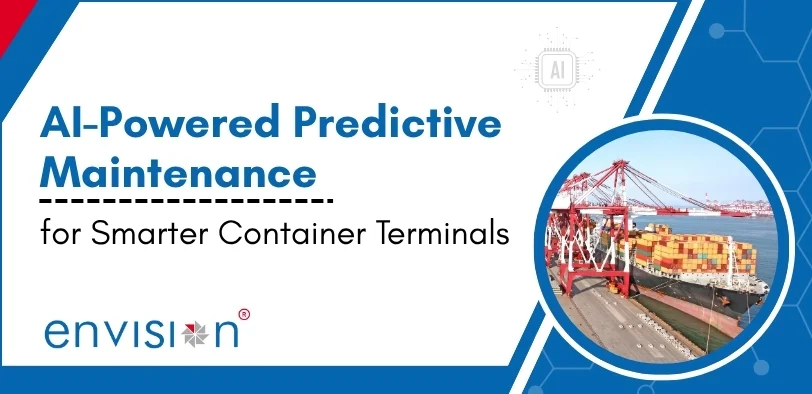
Envision GCTOS uses AI-based algorithms and dynamic real-time analytics to optimize yard allocation. The system takes into account the dimensions of cargo, storage needs, sequence of handling, and schedules of vessels in such a way that terminals can use the available space optimally. There is coordination in the implementation of equipment with yard planning, where cranes, forklifts, SPMTs, and reach stackers are assigned to the best. Through constant checking of yard usage and equipment working conditions, Envision reduces idle time as well as avoiding operational bottlenecks.
In addition, Envision supports simulation of scenarios, which allows managers to experiment with various operation approaches prior to implementation. Predictive modeling determines the possible sources of congestion and proposes alternative resource allocation to enhance decision-making and minimise operational risk. In the case of terminals that process a large amount of mixed cargo, these facilities translate directly into higher throughput, reduced operational expenses and improved service reliability.
Operational Intelligence and Predictive Analytics
Operational intelligence that works in real time is critical to making preemptive decisions in complicated terminal environments. Envision GCTOS offers dashboards and analytics platform, which consolidates the information about yard operations, vessel schedules, equipment usage, gate movements and cargo records. The insights allow the managers to determine trends, predict bottlenecks, and pro-actively allocate resources.
Predictive analytics in Envision GCTOS predict possible delays by checking historical patterns in the flow of cargo, the equipment used, and the possible conditions of work. This enables the terminals to modify schedules, re-allocate equipment, and inform the stakeholders of expected delays before hand. Decision-makers are able to have a holistic picture of the operational performance, which would aid in the additional strategic planning and risk reduction.
The operational intelligence provided by envision comes inhandy especially in mixed-cargo terminals in which the diversity of cargo and scheduling complexity renders reactive management in adequate. With the help of the information-based insights, ports would be able to enhance the quality of operations, reduce the number of errors in cargo handling, and preserve high standards of the services that would be provided regardless of the type of cargo.
Billing Automationand Financial Accuracy
General cargo operations require sophisticated billing mechanisms due to the diversity of cargo types and handling requirements.Traditional manual processes are prone to errors, delays, and revenue leakage. Billing complexity arises from variable tariffs based on cargo weight, volume, handling method, storage duration, and additional services.
Envision GCTOS integrates billing directly with operational events, ensuring accurate, timely, and auditable invoicing. Automated calculation of tariffs reduces administrative over head and eliminates discrepancies. The system also supports integration with ERP and financial systems, enabling real-time revenue tracking and financial reporting. For terminal operators and decision-makers, this ensures both operational and financial transparency while accelerating revenue cycles.
Digital Transformation and Future-Readiness
Digitalization is spreading fast across the maritime industry due to the rising cargo volumes, the need to be sustainable, and to be transparent to the stakeholders. Envision GCTOS helps ports to modernize their operations with the combination of automation, analytics, AI, andinter operability. This has a cloud-ready architecture that provides scalability, high availability, and resilience in large scale operations.
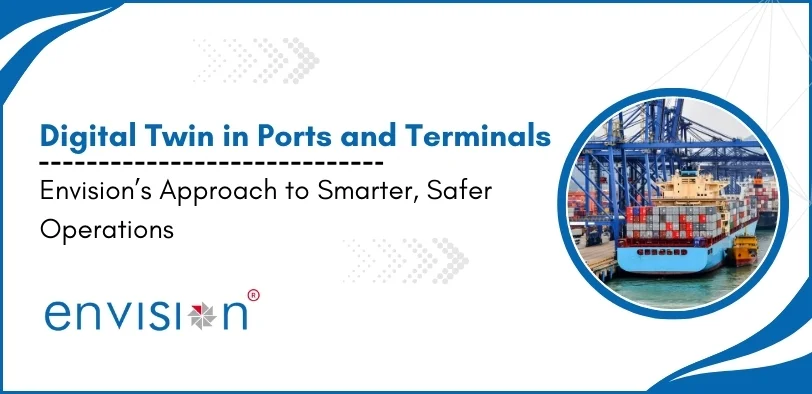
Digital twin technology will enable terminals to model cargo operations, stowage plans, and yard layouts virtually and execute them in the real world. This minimizes operational risk and enhances the accuracy of the planning. Field personnel are fed with real-time updates, operator guidelines, and safety compliance checklists that are delivered through mobile applications which promote the efficiency and communication of the workforce.
To the decision-makers, implementing Envision GCTOS is not only a technological upgrade- but a strategic move that will make terminal operations future-proof. Ports become able to keep managing the growing complexity of the cargo, integrate new technologies, and provide high-quality services at all times.
Safety, Compliance,and Environmental Considerations
The issue of mixed-cargo terminals is increasing the safety and compliance risks because of the different cargo characteristics and handling demands. Incorrect stacking, abuse of equipment, or recording mistakes may lead to accidents, legal fines, and operational interferences. EnvisionGCTOS entails the integration of safety measures and compliance tests in work processes. The system applies rules related to specific handling of cargo, oversees the use of equipment, and complies with local, national, and international regulations.
Moreover, the sustainability of the environment is becominga major performance indicator of terminals. Envision can help in achieving a more sustainable operation through better use of equipment, less un-warranted movement of equipment, and having an efficient plan of the energy consumption. Predictive analytics also enable terminals to reduce waste and utilize resources in a responsible manner to align their operational efficiency and environmental responsibility.
Implementation Strategy and ROI
Envision GCTOS offers a modular deployment strategy, allowing terminals to adopt the system progressively. The core modules like yard management, vessel planning and equipment tracking may be deployed initially and billing, analytics and advanced workflows can be deployed subsequently. This incremental implementation minimizes risk, minimal operational disturbance and will enable terminals to enjoy a tangible ROI within a short time after the deployment.
Extensive training and change-management services will make sure the staff embraces emerging digital workflows effectively. The integration services level match Envision to the available PCS, ERP and IoT systems and ensure data integrity and allow digital transformation. Constant support, monitoring of performance and planning of the road map will make sure that Envision transforms in line with terminal needs to ensure that the operation and financial benefits are maximized over the long run.
Conclusion
Contemporary general cargo terminals are working in the environment that has never been so complex. Combined with container workflows, mixed-cargo workflows necessitate integrated systems, real-time intelligence and inter-operability in order to ensure efficacy, security and profitability. General Cargo Terminal Operating System is a specially designed solution to this dilemma, which includes the combination of both the container and general cargo operations into a unified, smart system. Envision allows terminals to streamline operations, improve decision-making, and at tain sustainable growth because of its ability to optimize the management of yards, predictive analytics, automated billing, IoT connectivity, and compliance monitoring.
Envision GCTOS is a transformative investment to port authorities, terminal operators, and decision-makers who are interested in a solution that is future-ready. It provides operational clarity, financial precision, and strategic intelligence to all types of cargo, and by placing mixed-cargo terminals in the current competitive maritime environment, it provides them with a competitive edge.
Contact Us to Explore How Envision GCTOS Enables Integrated Management of Container and General Cargo Operations in Complex Terminal Environments
Talk to us today to know how our solutions can accelerate your digital transformation
Let's Talk

.webp)


.webp)
.webp)
.webp)
.webp)


%20ver1_1.webp)


.webp)
.png)
.png)