Envision
Digital Twin Technology for Smart Ports: Real-Time Operational Intelligence, AI Automation & Predictive Port Operations
Table of Content
1. Introduction
2. Understanding Digital Twin Technologyin Port Operations
3. Core Components of a Smart Port Digital Twin
4. Digital Twin technology at Ports – Strategic benefits
5. Digital Twin Use Cases Across Port Operations
6. Envision Smart Port Roadmap for Digital Twin Adoption in 2026
7. Cybersecurity and Data Governance Considerations
8. The Future of Smart Ports with Digital Twin Technology
9. Business Benefits of Digital Twin Technology for Smart Ports
10. Conclusion
Introduction
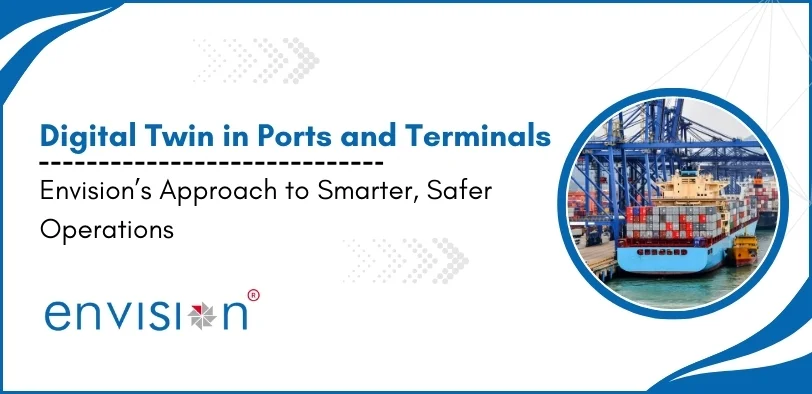
Ports around the world are stepping into an era in which operational intelligence, predictive automation, and real-time visibility willbe the keys to success. The current terminal management model is no longer enough for handling the growing amounts of cargo, larger vessels, complex machinery, environmental goals, and high customer standards. With container terminals, bulk terminals, logistics centers, and smart ports continuing to increase their pace of digital transformation, Digital Twin technology becomesa pre-requisite for modern ports.
Digital Twin technology is much more than a simple visualization solution or a simulation tool. It is a real-time synchronized digital version of the physical port facilities, operations, cargo flows, machinery performance, energy consumption, and decision-making processes. Digital Twin scan enable ports to create intelligent, self-optimised operational environments for their ports through the use of IoT sensors, AI algorithms, TOS, predictive maintenance, GIS solutions, automation technologies and other sources of operational data.
Port operators will be even more challenged for efficient, sustainable, secure and resilient operations in 2026. In order to overcome the reactive approach, ports must adopt an alternative strategy due to increasing congestion, shortage of manpower, rising fuel prices, environmental laws and the uncertainty of disruptions to the supply chain. Digital Twin technology helps ports implement the necessary layer of operational intelligence.
Envision Smart Port solutions consider the implementation of the Digital Twin as an enterprise-wide transformation of operations. It's more than just tracking assets, it's about predictive planning, scenario modelling, operational forecasting, intelligent automation, carbon optimization and integrated command and control visibility in marine, yard, gate, rail, depot and logistics operations.
Understanding Digital Twin Technology in Port Operations
A Digital Twin within the port ecosystem represents a livesimulation of the actual infrastructure, systems, and processes in the form of a virtual copy. In contrast to conventional dashboards and reporting systems, Digital Twins provide a live simulation of operational processes and intelligence based on such simulations.
Digital Twin systems in a modern smart port eco-system connect different operational layers such as Terminal Operating Systems, equipment telematics, automated cranes, yard vehicles, vessel traffic systems, weather monitoring systems, IoT sensors, ERP systems, energy management systems, maintenance applications, and AI analytics engines.
Digital Twin systems continually update operational models with real-time data streams obtained from quay cranes, RTGs, RMGs, AGVs, reefer monitoring systems, truck appointment systems, OCR gates, vessel scheduling systems, berth occupancy systems, and warehouse operations. The integration of all these components helps the operator gain visibility into current operational processes and predict future scenarios.
Envision Smart Port architecture positions the Digital Twin as the intelligence core of the port ecosystem. Instead of operating multiple disconnected systems independently, the Digital Twin creates a unified operational environment where data, automation, analytics, and operational decision-making converge into a centralized control framework.
Core Components of a Smart Port Digital Twin
An enterprise-grade Digital Twin ecosystem for ports consists of several inter-connected technology layers that collectively enable real-time operational intelligence.
IoT and Sensor Infrastructure
High frequency data collection is critical for Digital Twins. Operating data is captured in real time from smart sensors that are deployed on cranes, yard equipment, power systems, berth infrastructure, warehouses, and gate operations and fed into centralized intelligence platforms. Variables like equipment temperature, vibration, fuel usage, cycle times, energy usage, tire pressure, container dwell time and structural stress conditions are measured in real time.
AI and PredictiveAnalytics
Operational data with in Digital Twin is fed into AI engines which analyze the data to look for trends, predict disruptions, and suggest optimizations. Predictive analytics models enables the terminals to predict congestion, crane failure, berth conflicts, container pile density, truck turnaround delays, and fluctuation in energy demand.
Integration with Terminal Operating Systems
The effectiveness of Digital Twin technology depends on seamless integration with advanced Terminal Operating Systems. Envision Smart Port architecture enables Digital Twins to interact directly with vessel planning modules, yard planning engines, equipment dispatch systems, gate management platforms, billing systems, and cargo tracking applications. This integration ensures operational synchronization between virtual models and physical operations.
3D Visualization and Simulation
Modern Digital Twin platforms provide immersive three-dimensional operational visualization capabilities. Port operators can monitor berth utilization, yard density, equipment movement, vessel traffic, and cargo flow in real time through inter active operational models. Scenario simulation engines enable operators to test operational changes before implementing them in live environments.
Cloud and Edge Computing
The scalable computing infrastructure that can reliably handle large-scale operational data with low latency is crucial for smartports. Edge computing is designed for scenarios that require rapid processing locally, such as automation systems, autonomous vehicles, and mission-critical operational functions, while cloud platforms are intended for the centralized analytics, enterprise integration and long-term operational intelligence.
Digital Twin technology at Ports – Strategic benefits
Digital Twin technology brings tangible benefits ofoperational, financial and strategic value to port systems.
Predictive Operational Intelligence
Reactive operational management is frequently the approach that traditional ports take toward operations. Digital Twins bring operations into the realm of predictive intelligence, predicting congestion, equipment failures, vessel delays and bottlenecks before they even happen. This will greatly contribute to the accuracy in operational planning and terminal responsiveness.
Improved Asset Utilization
Terminal operators have one of the biggest capital investments in the form of container handling equipment. Digital Twins continually assess equipment productivity, downtime, maintenance records, utilization and efficiency. This allows for the optimization of crane deployment, allocation of yard vehicles, avoidance of unnecessary movement and maximization of the use of infrastructure.
Optimized ship turnaround time
Port productivity is one of the key factors that affect port performance. Digital Twins enhance the precision and effectiveness of berth planning by combining vessel schedules, crane assignments, tidal information, yard availability, and labor allocation into a comprehensive operational model. Operators can use AI-powered simulation engines to determine the optimal berth strategy and boost throughput capacity by minimizing vessel waiting times.
Predictive Maintenance Optimization
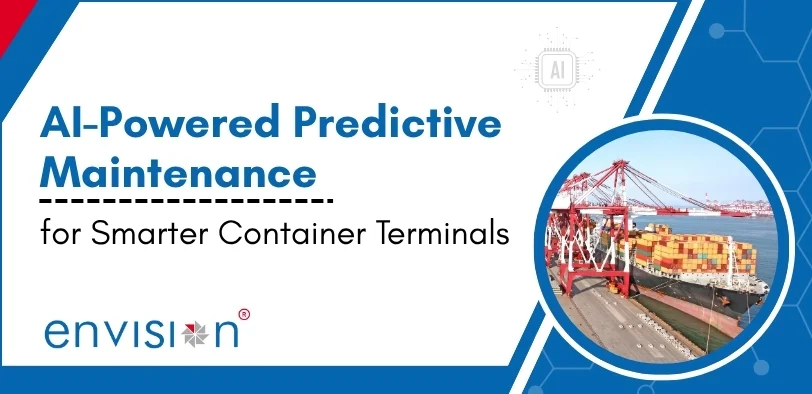
Unexpected equipment failures can cause disruption to productivity at the terminal and contribute to operational costs. Digital Twins continuously track the performance of the equipment and use predictive maintenance algorithms to estimate the degradation of components and their need for maintenance. This minimizes downtime, maximizes equipment life and decreases maintenance costs.
Sustainability and Energy Optimization
Global ports increasingly consider environmental compliance to be a priority. Digital Twins can be used to monitor emissions, fuel consumption, energy use and carbon output for terminal operations, which can help initiatives to build a more sustainable operation. Optimizing energy distribution, electrification strategies, equipment routing and the use of alternative fuels can be achieved through simulation models in a port.
Digital Twin Use Cases Across Port Operations
Digital Twin implementation is made possible across various operational domains within smart ports.
Construction and Maritime Activities
Digital Twins can be used for intelligent berth allocation,vessel arrival prediction, pilot scheduling, tug coordination and marinetraffic optimization. Ports can use vessel simulation and berth occupancy models to enhance the movement of vessels and minimize congestion and idle vessel time.
Yard Optimization
One of the biggest challenges faced by container terminals is yard congestion. Digital Twins can be used to understand the density of containers, allocation of yard blocks, equipment dispatch and the movement of trucks to increase the productivity of the yard. Using AI capabilities, optimization models dynamically suggest container positioning strategies to minimize re-shuffle and maximize crane productivity.
Monitor gate and truck movements
Satisfied customers rely on the efficiency of terminals while trucks affect it. Digital Twins combine OCR technology with scheduling apps, GPS data and traffic analysis to improve truck routing, gate lanea llocation and the turnaround process. Real-time visibility allows to manage traffic proactively during peak operating hours.
Rail and Intermodal Coordination
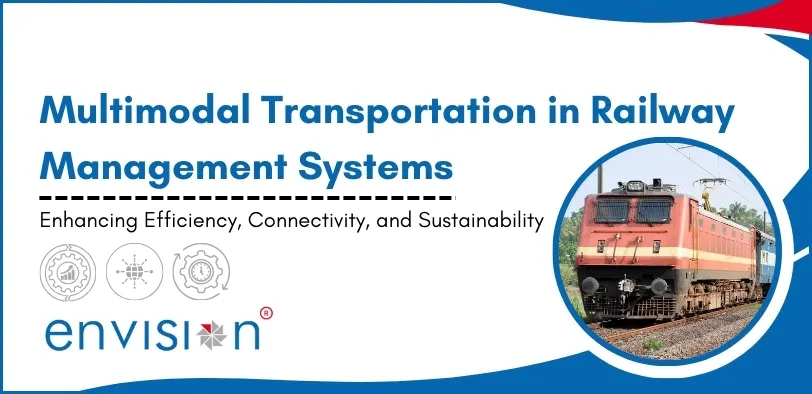
The logistics chains of modern systems must be coordinated from the ports to rail stations, depots and the logistics corridors on the land. Digital Twins provide integrated visibility through out intermodal operations, helping to synchronise the cargo and reducing transfer delays.
Energy and Utility Management
Smart ports are becoming more and more complex energy systems, involving shore power systems, renewable energy facilities, battery infrastructure, and electrically powered equipment. Digital Twins track the energy demand pattern and optimise energy distribution strategies for the terminal infrastructure.
Envision Smart Port Roadmap for Digital Twin Adoption in 2026
Digital Twin implementation is not just about specific technology; it needs to be part of a transformation roadmap.
Phase One: Digital Infrastructure Assessment
Ports have to assess where they are now (operational systems, data quality, network infrastructure, level of automation, and cybersecurity) before making plans. Envision Smart Port consulting frameworks evaluate gaps in operations and pinpoint requirements for integration needed for Digital Twin deployment.
Phase Two: Data integration and operational connectivity
This phase is about the integration of operational systems in a single intelligence architecture. Secure inter operability frameworks must be established between Terminal Operating Systems, ERP platforms, equipment telemetry systems, IoT sensors, maintenance applications and GIS infrastructure.
Phase Three: Real-Time Operational Modeling
With the operational data integration successfully achieved, ports can start to create operational models that are dynamic in representing marine operations, yard activities, equipment movement and cargo flow. These models can serve as the basis for predictive analytics and scenario simulation.
Phase Four: AI-Driven Predictive Intelligence
AI capabilities are added to function in automating operational forecasting, predictive maintenance, resource optimization, and decision support. It is constantly fine-tuning its operations based on historical and real-time data patterns using machine learning algorithms.
Phase Five: Autonomous and Self-Optimizing Operations
The next step in the long term vision for Digital Twin deployment is to provide semi-autonomous and full autonomous operational ecosystems. Intelligent Digital Twins will be more and more involved in automated dispatching, autonomous vehicle coordination, robotic equipment optimisation, and adaptive operational planning.
Cybersecurity and Data Governance Considerations
With Digital Twins becoming key platforms for operational intelligence, cybersecurity becomes crucial. Ports are considered vital national infrastructure, thus becoming very sensitive operational environments.
Smart Port Design Architecture assumes that cybersecurity should be based on the principles of zero trust, encryption of all operational data exchanges, identity-based access control, operational segmentation, continuous threat detection, and secure integration via APIs. The issue of data governance should cover such aspects as ownership, compliance, interoperability, and scalability.
Another important issue that needs to be considered is that of operational resilience. Digital Twins should provide high availability, disaster recovery, and continuity of operations even in case of network and cybersecurity threats.
The Future of Smart Ports with Digital Twin Technology
In 2026, the use of Digital Twins will become a must-have rather than a novel technology for ports. Those ports that implement DigitalTwin technologies at an early stage will gain significant competitive advantages in terms of operational efficiency, sustainability, customer experience,and automation capabilities.
The combination of artificial intelligence (AI), Internet ofThings (IoT), 5G connectivity, autonomous machines, robots, and cloud computing will facilitate the development of intelligent port ecosystems. Future Digital Twins will go beyond monitoring processes to managing and optimizing operations without any human interaction.
Smart Port strategy focuses on Digital Twin technology as the main platform for future port innovations. The ports that adopt DigitalTwin technologies in combination with Terminal Operating Systems (TOS), predictive analytics, and AI automation will be more sustainable and commercially successful.
Business Benefits of Digital TwinTechnology for Smart Ports
A Digital Twin can deliver concrete business outcomes: profitability, scalability of port operations, customer satisfaction and level of competitiveness of the port operators, terminal operators, logistics providers and infrastructure investors. Organizations considering investments in Digital Twin are mostly concerned with achieving ROI, improving operational efficiency, being ready for automation, meeting sustainability standards, and achieving enterprise-wide visibility. Envision Smart Port Digital Twin frameworks are designed to accomplish these strategic business objectives and to enable ports to become smart, data-driven operational ecosystems.
Optimize operations for a faster ROI
Digital Twin platforms provide real-time data on berths, equipment productivity, yard density, truck turnaround efficiency and cargo flow, making them a potent tool to combat operational inefficiencies. Ports can increase their throughput without significant investments in new construction if they can utilize their current equipment and facilities to their fullest capacity. This enables terminal operators to realize quicker ROI of existing investments and enhance overall operational productivity.
Operational intelligence with AI can help terminals discover hidden operational issues, achieve a more precise allocation accuracy of resources, cut down on idle equipment and boost the productivity of cranes using Envision Smart Port Digital Twin solutions. The improvements directly lead to lower operating costs and increased terminal revenue generation.
Improved equipment downtime and maintenance costs
Surprises arise with equipment failures in terminal environments with significant financial and operational disruption. Digital Twin tech leverages predictive analytics and sensor-based monitoring to keep an eye on crane health, yard equipment performance, energy system and infrastructure conditions, and more, on a continuous basis.
Envision Smart Port predictive maintenance frameworks assist terminals in minimizing downtime, pro-longing equipment life, decreasing the usage of spares, and optimizing maintenance planning. This transition from reactive maintenance approach to condition-based approach can help terminal operators to cut down on maintenance costs and enhance operational reliability.
Enhanced vesselturn-around and increased vessel throughput capacity
Vessel Turnaround Efficiency and Cargo Handling Speeds are a critical factor in Port competitiveness. Real-time simulation of operations on Digital Twin platforms enhances berth planning, crane allocation, yard synchronization and marine coordination.
AI-driven Digital Twin intelligence can simulate operational scenarios in advance and aid operators in choosing the most efficient workflow for vessel operations. Improved vessel turnover translates to increased berth productivity, less congestion risk and more terminal throughput capacity without the need to immediately expand the physical footprint.
Enhanced Customer Service and Supply Chain Visibility
Increased real-time visibility and the ability to predict operational performance is being required by shipping lines, freight forwarders, cargo owners and logistics providers. Digital Twin ecosystem senable centralized operational intelligence to enhance cargo tracking accuracy,ETA forecasting, truck scheduling visibility and intermodal coordination.
By leveraging data-driven operational insights, automated notifications, and integrated supply chain visibility, Envision Smart Port Digital Twin platforms can help terminals provide data-driven customer experiences. This boosts the user confidence, deepens business ties and elevates the terminal image in global trade arena.
Benefits of sustainability compliance and carbon reduction
Port operators are increasingly aware of the importance of environmental regulations and sustainability requirements. Digital Twin technology is used to monitor emission, fuel usage, energy use and carbon emission in the operational workflow of terminals.
Envision Smart Port sustainability intelligence frameworks help with carbon reduction projects by optimizing equipment routing, electrification strategies, balancing energy use and monitoring fuel use. These are the features that enable terminals to meet ESG targets and lower their future energy consumption costs.
single end-to-end view of operations and data-driven decision-making
The lack of operational visibility across various systems and departments is one of the major challenges in traditional port operations. The Digital Twin concept brings together operational intelligence in a single command and control environment.
Envision Smart Port Digital Twin architecture brings all the elements of Terminal Operating Systems, ERP platforms, IoT infrastructure, maintenance systems, automation technologies and AI analytics into a unified operational ecosystem. Centralized visibility enhances decision making at the top level, coordination across operations, workforce planning and long-term forecasting.
Future-Ready Infrastructure for Automation Expansion
Digital Twin platforms emerge as indispensable operational pillars for future-proof automation as ports increasingly integrate autonomous systems, AI-powered planning, smart logistics solutions, and other automation technologies into their operations. In the era of increasingly automated ports, autonomous equipment, AI-based planning tools, and intelligent logistics systems, Digital Twin platforms are crucial operational support for future-proof automation.
Envision Smart Port Digital Twin solutions are flexible,modularly designed and API-driven, ready for future technology expansion. This enables ports to gradually make the transition to autonomous cranes, AGVs, robotic systems, AI dispatching engines, intelligent traffic management platforms, etc., without disrupting the existing operations.
Ability to compete in the marketplace and to scale up over the long term
Ports in a very competitive global logistics market need to continuously work to improve their efficiency, reliability and service quality to keep shipping lines and the cargo operators. Digital Twin technology enablesterminals to keep up with the commercial competition in data-driven supplychains.
Enhanced efficiency and effectiveness, scalability,resilience to supply chain challenges, infrastructure utilization and business sustainability for the long-term are all benefits of Digital Twin solutions. Digital Twin adoption is a strategic investment that can bring tangible benefits to decision makers in terms of operational improvements, financial efficiency and future-proof digital infrastructure.
Conclusion
In today's ports, Digital Twin technology is transforming the nature of operational architecture. With growing cargo demand, supply chainvolatility, sustainability demands, and digital transformation needs, ports need to have intelligent operational ecosystems that can make predictive decisions and optimize in real-time.
Digital Twins are much more than platforms for digital visualization. They act as one operational intelligence framework, integrating infrastructure, equipment, automation, analytics and enterprise operations into a unified smart port environment.
The 2026 roadmap is clear for terminal operators, logistics companies, and port authorities. Organizations looking to increase operational resilience, prepare for automation, optimize sustainability, gain a long-term competitive advantage, etc., can no longer afford not to invest in Digital Twin technology. Digital Twin transformation is becoming a reality in ports today and it's creating the technology backbone for tomorrow's smart trade infrastructure.
For organizations assessing investments in a Digital Twin, it is important to look at a platform with the ability to accommodate multiplet erminals, hybrid cloud, advanced analytics and future scalability to expand with automation. Choosing an experienced technology partner that has expertise in Terminal Operating System, smart port engineering, AI integration, and enterprise interoperability is crucial for long-term success. Envision SmartPort solutions offer configurable Digital Twin frameworks for container terminals, bulk cargo terminals, inland depots, logistics parks and multimodal transport ecosystems. These platforms allow for fast deployment, operational customization, API-based integration, predictive maintenance intelligence, monitoring sustainability, and command center visibility. For ports that are implementing digital modernization projects in 2026, the adoption of a Digital Twin is a smart investment for the operational element, as studies show it can enhance the overall throughput, reduce operational risk, re-inforce the performance of customer service and speed up the development of smart autonomous ports that are worldwide data-driven.
Advanced simulation capabilities also help to plan investments, assess the growth of terminal infrastructure networks, optimize manpower, plan for carbon reductions, and benchmark the performance of terminal and port operations in global terminal networks, resulting in tangible performance improvements and competitiveness.
Accelerate your port’s digital transformation with Envision Smart Port Digital Twin solutions designed for intelligent automation, predictive operations, sustainability optimization, and future-ready terminal scalability.
Connect with Envision to discover how advanced Digital Twin technology can help your port improve operational visibility, increase throughput, reduce risk, and build a resilient smart port ecosystem for 2026 and beyond.
Talk to us today to know how our solutions can accelerate your digital transformation
Let's Talk

.webp)


.webp)
.webp)
.webp)
.webp)


%20ver1_1.webp)


.webp)
.png)
.png)