Envision
Cybersecurity in Automated Terminals: Protecting Global Port Operations
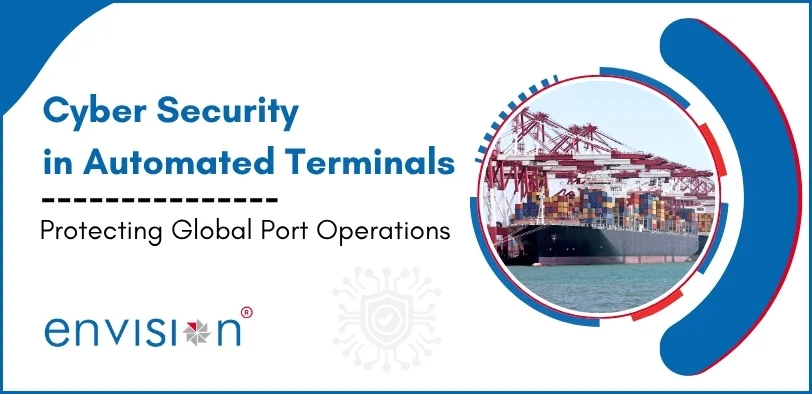
Table of Content
1. Introduction
2. The Landscape of Automated Terminals
3. Cybersecurity Challenges in Automated Terminals
4. Threat Scenarios and Impacts
5. Strategies for Securing Automated Terminals
6. Future Directions
7. Conclusion
Introduction
The maritime industry is rapidly transitioning toward fully automated terminals, integrating advanced technologies such as Terminal Operating Systems (TOS), autonomous vehicles, industrial IoT devices, and cloud-based analytics. These innovations enable real-time tracking, predictive maintenance, and highly efficient container handling, reshaping global port operations. However, this technological convergence of IT, OT, and IIoT systems introduces complex cybersecurity challenges. Automated terminals face an expanded attack surface, vulnerabilities in legacy infrastructure, insider threats, ransomware, and supply chain risks, all of which can disrupt operations, compromise sensitive data, and jeopardize safety. Addressing these risks requires a comprehensive, multi-layered security approach encompassing network segmentation, device protection, continuous monitoring, incident response planning, vendor security, employee training, and adherence to international standards. Robust cybersecurity is now pivotal to ensuring the operational resilience, safety, and competitiveness of modern ports.
The Landscape of Automated Terminals
Modern automated terminals integrate multiple layers of technology to achieve operational autonomy. Core components include automated yard cranes, AGVs, automated quay cranes, terminal operating software, IoT devices, and cloud-based analytics platforms. These components collectively enable real-time tracking, predictive maintenance, and optimized container handling.
1. Terminal Operating Systems (TOS)
TOS platforms are the digital backbone of automated terminals, coordinating equipment movements, scheduling container transfers, and monitoring yard operations. While highly efficient, TOS platforms are attractive targets for cyberattacks because compromising them can disrupt terminal operations, halt container flows, or manipulate operational data for financial or strategic gain.
2. Operational Technology (OT)
OT systems, including programmable logic controllers (PLCs) and supervisory control and data acquisition (SCADA) systems, directly manage automated equipment. Unlike traditional IT systems, OT often prioritizes availability and real-time performance over security, making them susceptible to sophisticated cyber threats.
3. Industrial Internet of Things (IIoT)
Sensors and connected devices collect vast amounts of operational data, enabling predictive maintenance and process optimization. However, these devices often lack robust security features and can serve as entry points for malicious actors seeking to in filtrate terminal networks.
4. Cloud and Data Integration
Cloud plat forms allow remote monitoring, analytics, and integration with global logistics systems. While beneficial for scalability and efficiency, cloud connectivity introduces additional exposure to cyber risks, including data breaches, ransomware attacks, and supply chain compromises.
Cybersecurity Challenges in Automated Terminals
The integration of IT, OT, and IIoT within automated terminals creates a complex cybersecurity landscape with unique challenges:
1. Expanded Attack Surface
Automated terminals involve thousands of interconnected devices, each potentially vulnerable to exploitation. Every AGV, sensor, and crane controller represents a potential entry point for attackers. The sheer volume of end points complicates monitoring, detection, and response efforts.
2. Convergence of IT and OT
Historically, IT and OT operated in silos. IT systems focused on data integrity and confidentiality, while OT prioritized safety and operational continuity. In automated terminals, these domains converge, and security protocols must reconcile conflicting priorities. A breach in the IT network can propagate to OT systems, potentially halting terminal operations.
3. Legacy Systems and Inconsistent Security Standards
Many terminals upgrade incrementally, integrating automation technologies with legacy infrastructure. Older equipment often lacks security features, firmware updates, or encryption capabilities, creating vulnerabilities that attacker scan exploit. Additionally, inconsistent adherence to cybersecurity standards across equipment vendors can create gaps in protection.
4. Insider Threats
Human factors remain a significant vulnerability. Terminal staff, contractors, or third-party vendors may unintentionally introduce malware, mishandle credentials, or neglect security protocols. Malicious insiders, though less common, can exploit privileged access to compromise operations.
5. Ransomware and Advanced Persistent Threats (APTs)
Ransomware attacks targeting critical infrastructure are increasingly common. Automated terminals are particularly susceptible because operational downtime directly translates into financial losses. Similarly, APTs—sophisticated, stealthy cyber campaigns—can infiltrate terminal networks, remain undetected for months, and ex-filtrate sensitive data or manipulate equipment.
6. Supply Chain Vulnerabilities
Automated terminals rely on software, hardware, and cloud services from multiple vendors. Vulnerabilities in third-party components can compromise the terminal’s security posture. Supply chain attacks, such as inserting malicious code into software updates, pose significant risks that are difficult to detect and mitigate.
Threat Scenarios and Impacts
Cyber threats to automated terminals can manifest in diverse ways, with potentially severe operational, financial, and reputational consequences:
1. Operational Disruption
A successful cyberattack can halt AGVs, cranes, or gate operations, causing congestion, delayed shipments, and cascading effects throughout global supply chains. Downtime can cost ports millions of dollars per day and damage client trust.
2. Data Breach and Intellectual Property Theft
TOS platforms and analytics systems store sensitive operational, financial, and strategic data. Unauthorized access to this information can result in competitive intelligence leaks, regulatory penalties, or targeted cyber campaigns against logistics partners.
3. Physical Safety Risks
Compromised OT systems controlling automated cranes or vehicles can pose direct safety risks to personnel, equipment, and cargo. Malfunctioning cranes or errant AGVs can cause accidents, equipment damage, or environmental hazards, highlighting the intersection of cybersecurity and safety.
4. Reputational and Regulatory Implications
Ports are critical national infrastructure. Cyber incidents can erode stakeholder confidence, attract regulatory scrutiny, and potentially invoke national security concerns. Ensuring robust cybersecurity is therefore integral to maintaining public trust and regulatory compliance.
Strategies for Securing Automated Terminals
Effective cybersecurity in automated terminals requires a multi-layered approach that addresses IT, OT, human factors, and vendor ecosystems. Key strategies include:
1. Comprehensive Risk Assessment
Ports should conduct thorough assessments to identify vulnerabilities across IT, OT, and IIoT components. This includes penetration testing, network mapping, threat modeling, and evaluation of third-party systems. Risk assessments should be continuous to adapt to evolving threats.
2. Network Segmentation and Zero Trust Architecture
Segmenting networks between IT, OT, and cloud systems reduces the potential for lateral movement by attackers. Implementing zero trust principles—verifying every device, user, and process before granting access—enhances resilience against unauthorized access.
3. Endpoint and Device Security
Automated equipment and IIoT devices should be equipped with authentication mechanisms, encryption, and firmware integrity checks. Regular updates and patch management mitigate vulnerabilities in both new and legacy systems.
4. Monitoring and Threat Detection
Continuous monitoring of network traffic, device behavior, and system logs enables early detection of anomalies. Security Information and Event Management (SIEM)systems and OT-specific intrusion detection systems (IDS) provide real-time alerts to mitigate potential breaches.
5. Incident Response Planning
Automated terminals require detailed incident response plans that integrate IT and OT considerations. Plans should include protocols for containment, system restoration, communication with stakeholders, and coordination with national cybersecurity authorities. Regular drills and simulations strengthen organizational readiness.
6. Vendor and Supply Chain Security
Ports must evaluate vendors for cybersecurity compliance, require secure development practices, and implement verification processes for software updates and hardware components. Supply chain risk management is essential for preventing indirect cyber threats.
7. Employee Training and Awareness
Human factor splay a crucial role in cybersecurity. Staff should receive regular training on phishing, credential management, safe device usage, and reporting suspicious activity. Cultivating a security-conscious culture reduces the likelihood of insider-related incidents.
8. Regulatory Compliance and Standards Adoption
Compliance with industry standards such as ISO/IEC 27001, NIST Cybersecurity Framework, and IEC62443 enhances the security posture of automated terminals. Adherence to regulatory requirements ensures ports meet national and international expectations for critical infrastructure protection.
Future Directions
As automated terminals continue to evolve, cybersecurity strategies must anticipate emerging threats and technological advancements. Artificial intelligence (AI) and machine learning (ML) are expected to play increasingly significant roles in anomaly detection, predictive threat modeling, and automated response mechanisms. Edge computing can enable localized processing and security enforcement, reducing reliance on centralized systems and mitigating risks associated with cloud dependency.
Blockchain technology may enhance data integrity and transactional security, particularly in logistics documentation and inter-port communication. Moreover, collaborative frameworks among ports, shipping lines, and cybersecurity authorities can facilitate threat intelligence sharing and rapid response to cross-border incidents.
The evolution of5G networks, quantum computing, and autonomous decision-making systems introduces both opportunities and challenges. High-speed connectivity will enhance operational efficiency but may increase susceptibility to sophisticated attacks. Quantum-resistant encryption methods will become essential as computational capabilities advance.
Ultimately, the cybersecurity of automated terminals will depend on an integrated approach combining technology, processes, personnel, and governance. Proactive risk management, continuous monitoring, and adaptive security strategies will be critical in safeguarding maritime operations in an increasingly digital world.
Conclusion
Automated terminals represent the next frontier of maritime logistics, promising efficiency, cost reduction, and operational excellence. However, the benefits of automation are accompanied by significant cybersecurity risks that can disrupt operations, compromise data, and threaten safety. The convergence ofIT, OT, and IIoT systems, combined with evolving cyber threats, demands a comprehensive, multi-layered security approach.
By implementing robust risk assessments, network segmentation, device security, continuous monitoring, incident response plans, and employee training, ports can enhance resilience against cyberattacks. Adoption of international standards, secure vendor management, and proactive engagement with emerging technologies further strengthens the security posture of automated terminals.
As the maritime industry continues to embrace automation, cybersecurity will remain a cornerstone of operational sustainability, ensuring that automated terminals not only achieve technological innovation but also operate securely, efficiently, and reliably. Safeguarding the digital infrastructure of ports today will determine the resilience and competitiveness of global maritime logistics tomorrow.
Discover the Future of Container Terminal Operations with Envision TOS. Learn how Envision’s secure, intelligent Terminal Operating System is shaping automated ports worldwide. Contact us to know more.
Talk to us today to know how our solutions can accelerate your digital transformation
Let's Talk

.webp)

.webp)
.webp)




.webp)

%20ver1_1.webp)


.webp)
.png)




.webp)