Envision
How Envision PCS Connects Port Authorities, Customs, and Shipping Lines in One Digital Platform
Introduction
International maritime trade requires coordinated communication between port agencies, customs agencies, shipping firms, terminal agencies, freight forwarders, and regulatory organizations. Nevertheless, dis-jointed legacy systems, paper-based documentation, and isolated data environments still hinder the efficiency of operations in most ports. With the growth of vessel sizes and the size of cargo, the necessity to have a standardized digital structure becomes crucial.
A Port Community System (PCS) is a solution to these structural inefficiencies by developing an interoperable digital platform that unites all the port stakeholders in a centralized environment. Envision PCS is aimed at delivering a secure, consistent, and transparent online space that facilitates unproblematic interaction among port authorities, custom organizations, and shipping lines. By integrating the working process into one platform, it improves the accuracy of data, speed of regulatory compliance and strengthens governance within maritime ecosystems.
What Is a Port Community System (PCS)?
A Port Community System (PCS) is a neutral digital platform that enables secure, standardized information exchange among port authorities, customs administrations, shipping lines, terminal operators, and logistics stakeholders. It acts as a centralized data orchestration layer, connecting existing operational and regulatory systems through interoperable interfaces. By enabling single-window data submission and real-time visibility, a PCS streamlines documentation workflows, enhances compliance, reduces duplication, and improves coordination across the entire maritime trade ecosystem.
Importance and Benefits of a Port Community System
A Port Community System is foundational to digital port transformation. Its importance lies in eliminating redundancy, reducing turnaround times, and ensuring compliance with national and international trade regulations.
Key benefits include:
- Reduction in manual paperwork and duplication of submissions
- Enhanced transparency and traceability of cargo movements
- Improved vessel turnaround times
- Strengthened trade compliance and risk management
- Real-time operational coordination
- Reduced operational and administrative costs
By consolidating information flows, PCS reduces errors associated with manual data re-entry and minimizes delays caused by miscommunication between agencies. For C-level executives, it offers governance oversight and financial visibility. For technical teams, it provides standardized APIs and secure system integrations. For operators, it ensures real-time operational coordination.
The Strategic Role of a Port Community System
Single Point of Data Submission
A PCS allows the stakeholders to input data in one interface. Rather than submitting individual documents to the port authorities, customs and terminal operators, shipping agents submit uniform electronic documents that are available to relevant parties.
This principle of single submission minimizes duplication, increases the consistency of data and minimizes administrative burden. Electronic documentation substitutes the manual documentation hence information flows within the systems effortlessly.
Standardized Workflows of Documentation
Ports work with a great number of documents: manifests, bills of lading, cargo declarations, berth applications, and clearance certificates. These workflows are standardized by a PCS based on digital templates in accordance with international data models.
Standardization enhances interoperability among systems as well as, minimizing conflicts that occur due to different documentation. Rules that are automated when validating the data submitted guarantee that the data provided will comply with the requirements of the regulations and enhance effectiveness of compliance.
Operational Visibility in real time
The visibility of the operations plays a crucial role in controlling the traffic of the vessels, flows of the cargo and yard capacity. PCS integrate operational data streams and provide real-time dashboards to the concerned stakeholders.
Such visibility facilitates proactive decision-making. Port authorities are able to track the occupancy of the berths, customs can track the clearance statuses and shipping lines can track the shipment handling status. The outcome is coordinated maritime ecosystem.
Secure Role-Based Access
The most important is data security and confidentiality. A PCS has access control functions, which are based on roles, and a user can access only the necessary data.
Sensitive commercial and regulatory information is safeguarded by authentication frameworks, encryption standards and audit trails. These types of governance systems are in tandem with global best practices in cybersecurity and data protection.
National and International Systems Integration
Contemporary ports are involved in wider trade environments. A PCS is connected to customs systems, maritime single windows and shipping databases and logistics platforms.
Compatibility across borders Data compatibility across borders is guaranteed by interoperability with systems that are encouraged by the International Association of Ports and Harbors and global maritime digitalization programs. This integration will increase the resilience of the supply chain and trade competitiveness within the nation.
Connecting Port Authorities Through Centralized Governance and Visibility
Vessel Call Management
The Port authorities schedule the vessels, allocate the berths and coordinate the marine services. Envision PCS concentrates on managing the vessel calls through a single interface of scheduling.
The possibility of digital submission of port call requests enables the authorities to organize the pilots, tug services, and the assignment of berths effectively. The automated conflict detection helps to minimize overlaps and congestions during the scheduling.
Transparency in Revenue and Billing
The ports are also able to collect revenue in the form of port dues, berth charges, pilotage fees and cargo handling services. PCS involves the incorporation of financial processes in the operations.
Billing accuracy is guaranteed because the automation of the calculation of fees is performed basing on vessel parameters and cargo volumes. Digital invoicing and reconciliation enhance visibility and minimizes conflict as well as speeds up revenue collections.
Regulatory Oversight
Port authorities should implement the maritime safety, environmental compliance and operational standards. Regulatory agencies can also have a real-time control over vessel movements and compliance records through centralized dashboards.
This enhances the governance and helps to conform to international conventions that are run by organizations like the international maritime organization.
Enabling Seamless Customs Integration and Trade Compliance
Manifold Submission and Electronic Data Interchange
To control risks and ease trade customs authorities need prompt and correct information on freight. A PCS enables Electronic Data Interchange (EDI) protocols to enable shipping lines to pass manifests electronically.
Digital submissions in structure enhance integrity of data and shorten clearance processing periods. We have automated validation checks to guarantee the adherence of the customs regulations prior to the arrival of cargo.
Automation of Risk Assessment and Clearance
The custom agencies have integrated risk assessment modules where they analyze data on cargo based on predetermined criteria. High-risk consignments are indicated with automated alerts to be inspected and low-risk cargo has expedited clearance.
This information-based method is a balance between security and facilitation of trade, which enhances the national competitiveness.
Maritime single window compliance
Regulations set by international organizations require the use of electronic reporting using Maritime Single Window (MSW) systems. A PCS is a technical basis of MSW compliance.
Conformance to frameworks that are advocated by the International Maritime Organization will make the digital reporting of vessel arrivals and departures standardized to minimize paperwork and delays in the administration.
Integrating Shipping Lines into the Digital Ecosystem
Digital Pre-Arrival and Departure Processes
Shipping lines require predictable port processes. A PCS enables digital pre-arrival notifications, berth requests, and departure clearances.
Automated workflows reduce manual coordination and improve schedule reliability. Digital approvals accelerate turnaround times and enhance fleet utilization efficiency.
Real-Time Operational Status Updates
Operational transparency is essential for shipping lines managing global schedules. Through centralized dashboards, lines receive real-time updates on berth status, cargo discharge progress, and customs clearance. Improved visibility reduces uncertainty and enhances schedule planning.
Digital Documentation and E-Payments
Electronic documentation eliminates the need for physical paperwork exchanges. Secure digital signatures and document repositories ensure authenticity and traceability.
Integrated e-payment gateways enable digital settlement of port charges, improving financial efficiency and reducing processing delays.
Technical Architecture and Interoperability
Envision PCS operates on a modular, service-oriented architecture. Core components include:
- API gateway for external integrations
- Middleware for data transformation and orchestration
- Centralized data repository
- User interface layer with configurable dashboards
- Security and identity management framework
Open standards and RESTful API’s enable integration with Terminal Operating Systems, customs platforms, financial systems, and national logistics portals. Cloud deployment models enhance scalability, while hybrid architectures support on-premises requirements for sensitive regulatory environments.
Interoperability is achieved through standardized data models aligned with global maritime data exchange frameworks.
Measurable Operational and Financial Impact
Digitally integrated PCS environments demonstrate measurable improvements:
- Reduced vessel turnaround time
- Lower administrative processing costs
- Increased berth utilization efficiency
- Faster customs clearance cycles
- Improved revenue collection timelines
Quantifiable performance indicators enable executive leadership to assess return on investment and operational efficiency gains.
Data Analytics and Strategic Intelligence
Beyond transactional workflows, PCS platforms generate valuable operational datasets. Advanced analytics modules enable:
- Predictive congestion analysis
- Trade volume forecasting
- Revenue trend monitoring
- Compliance performance tracking
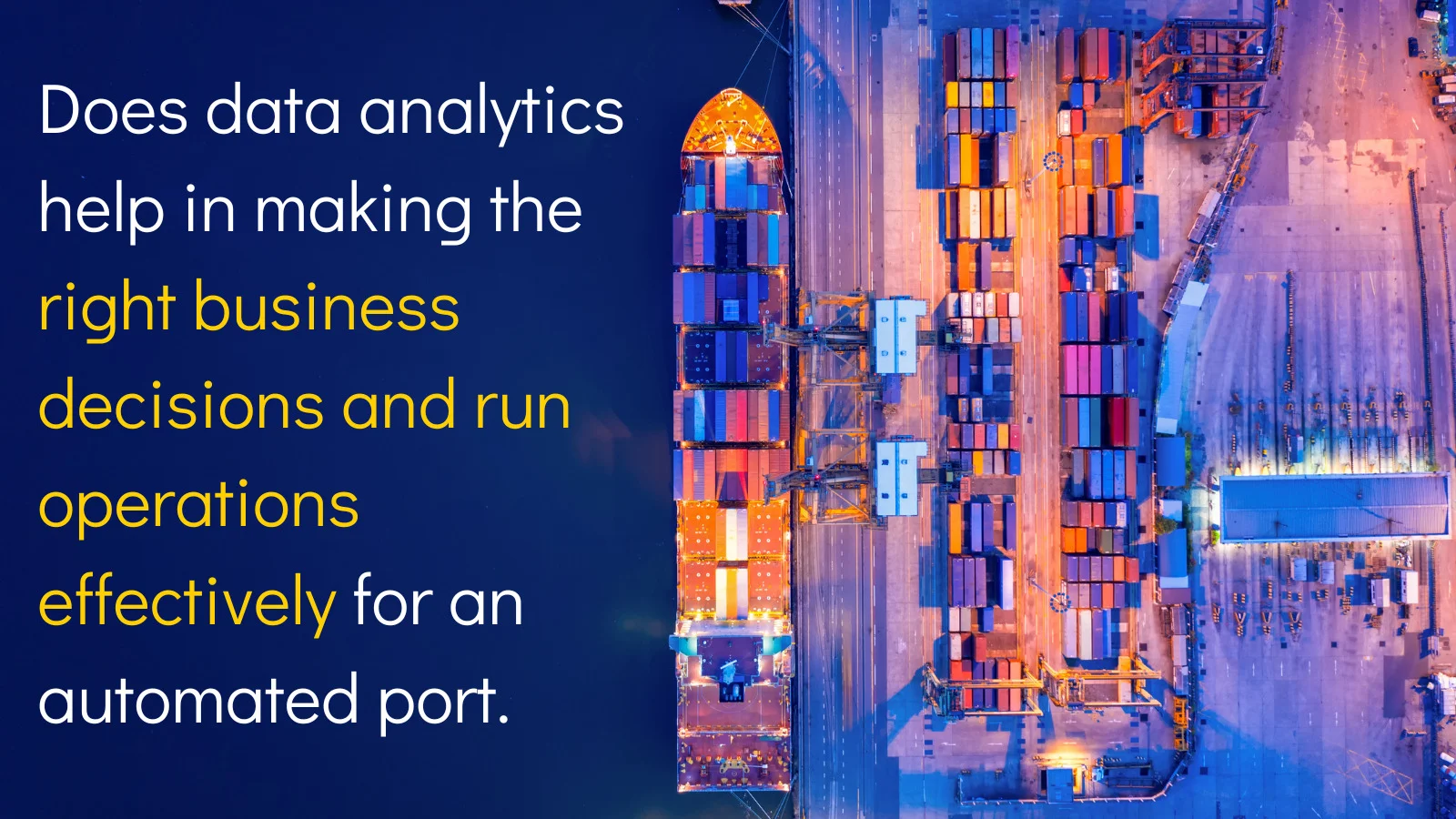
Data visualization dashboards transform raw operational data into actionable intelligence for policymakers and port executives. Strategic planning becomes data-driven rather than reactive.
Future Outlook: Foundation of Digitally Integrated Ports
The maritime industry is entering the period of intelligent automation and AI-powered analytics and cross-border digital integration. A PCS will be the basic structure of smart port systems.
The further improvements can be made in terms of integration with trade documentation based on blockchain, cargo tracking with IoT, and predictive maintenance systems working with AI. With ports keeping up with digital change strategies backed by international bodies like the International Maritime Organization, well-developed PCS will continue playing a key role in interoperability and compliance.
Ports that are digitally integrated will rely on secure data exchange, shared governance and standardized digital reporting framework.
Conclusion
In the complex ecosystem of the modern port, system fragmentation and manual processes still impact operational efficiency and coordination. A Port Community System (PCS) is a solution that helps solve these challenges by providing a common, secure, and standardized electronic platform for information exchange between all port stakeholders.
With the Envision PCS, there is the ability to submit data through a single window, conduct electronic data interchange (EDI), and standardize the generation of documents. This improves the coordination between port authorities, customs, and shipping companies while maintaining compliance with regulations and improving data integrity and efficiency in the process.
With the ability to integrate financial processes and the generation of key performance indicators, there is improved transparency in billing, reduced time in port, and improved customs clearance times.
In the context of global standards and frameworks, including the International Maritime Organization, the PCS is an integral part of the modern port infrastructure. This is because it is a digital foundation that is data-driven and efficient in the conduct of port business.
Looking to implement a Port Community System software? Get in touch with Envision experts to schedule a demo and see how you can improve efficiency, compliance, and turnaround times.
Visit our website at www.envisionesl.com
Talk to us today to know how our solutions can accelerate your digital transformation
Let's Talk

.webp)

.webp)
.webp)

.webp)

%20ver1_1.webp)


.png)






.webp)