Envision
Digital Twin in Ports and Terminals: Envision’s Approach to Smarter, Safer Operations
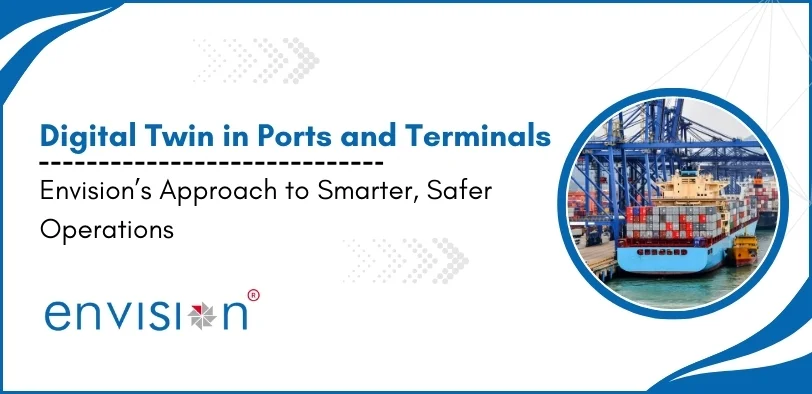
Table Of Content
1. Introduction
2. What is Digital Twin?
3. Operations in Digital Twin
4. Equipment in Digital Twin
5. Digital Twin in Resource Management
6. Data Sources in Digital Twin
7. Benefits of Digital Twin in Port Operations
8. How to Implement Digital Twin in Ports
9. Conclusion
Introduction
In today’s rapidly evolving maritime landscape, efficiency, accuracy, and predictive capability have become the pillars of successful port operations. Digital transformation is no longer optional; it is a strategic necessity. Among emerging technologies, Digital Twin stands out as a transformative force, offering ports the ability to mirror physical operations in a virtual environment, analyze real-time data, and drive informed decision-making. Envision, as a leading provider of terminal software solutions, leverages Digital Twin technology to redefine port operations, optimize equipment, empower personnel, and integrate diverse data sources for operational excellence.
What is Digital Twin?
A Digital Twin is a dynamic virtual replica of a real time equipment and operations, process, or asset that continuously receives data from its real-world counterpart. Unlike static simulation models, Digital Twins provide real-time visibility, predictive insights, and actionable intelligence, enabling operators to proactively manage assets, anticipate disruptions, and optimize workflows. In a port or a terminal context, a Digital Twin represents the entire terminal ecosystem—vessels, equipment, yard storage, gateways, and personnel—allowing managers to monitor performance, identify bottlenecks, and forecast operational scenarios before they materialize.
At Envision, Digital Twin technology transcends conventional monitoring. By connecting operational data, equipment metrics, human resource activity, and environmental inputs, the system enables a holistic understanding of terminal operations, paving the way for smarter, faster, and more sustainable decision-making.
Operations in Digital Twin
Vessel Operations
Vessel operations are the cornerstone of terminal efficiency. A Digital Twin enables ports to simulate vessel scheduling, berthing sequences, cargo loading and unloading, and turnaround times. Real-time tracking of vessels, integrated with weather conditions and berth availability, allows port operators to optimize docking windows, reduce waiting times, and avoid congestion. By monitoring vessel movements virtually, the system can forecast delays, reroute operations, and recommend optimal resource allocation, ensuring seamless integration with yard and gateway operations. In case of container terminals digital twin provides extensive real time operations, work ques, crane performance, congestion and constraints data. This will enable operations managers to intervene to manage the constraints for better performance.
Yard Operations
Yard operations encompass container storage, stacking, retrieval, and inventory management. A Digital Twin models container flow across storage yards, tracks occupancy rates, and predicts space requirements. Envision’s Digital Twin allows terminal managers to visualize container positions, plan efficient retrieval paths, and anticipate operational challenges. Simulation of yard layouts and equipment utilization helps optimize stacking strategies, reduce equipment idling, and maximize storage efficiency. By virtually replicating yard activity, operators can make data-driven adjustments to maintain throughput even during peak volumes.
Gate Operations
Gate operations involve the movement of containers between the terminal and external logistics networks. Digital Twins monitor gate entry and exit points, vehicle queuing, document verification, and container inspections. Envision integrates real-time gate data with terminal operating systems to simulate traffic flows, detect bottlenecks, and manage peak-hour congestion. By modeling these processes virtually, port operators can proactively adjust staffing, schedule gates, and enhance overall terminal throughput while maintaining security and compliance standards.
Equipment in Digital Twin
Utilization
Equipment utilization is a critical aspect of port efficiency. Digital Twins track cranes, forklifts, reach stackers, and automated guided vehicles (AGVs) in real time, measuring operational hours, movement patterns, and workload distribution. By analyzing utilization metrics, Envision enables terminal managers to balance equipment deployment, reduce idle time, and allocate resources according to demand, ensuring optimal productivity.
Performance
Performance monitoring evaluates how effectively equipment achieves its intended operational objectives. Digital Twins record productivity metrics, including container moves per hour, energy consumption, and task completion rates. Envision’s system provides actionable insights into performance trends, enabling predictive adjustments and process optimization to maintain high operational standards.
Predictive Maintenance
Predictive and preventive maintenance is a key benefit of Digital Twin technology. Continuous monitoring of equipment health—through sensors, IoT devices, and historical maintenance records—allows the system to anticipate failures, schedule timely interventions, and extend asset lifespan. Envision’s approach reduces unplanned downtime, improves reliability, and lowers maintenance costs by providing a virtual platform for maintenance simulation and planning.
Condition based maintenance
Equipment condition monitoring tracks real-time status, identifying wear, stress, or potential breakdowns. Digital Twins integrate data from equipment sensors, environmental conditions, and usage history to create a comprehensive profile of each asset. This enables proactive management, reduces operational disruptions, and ensures that equipment performs safely and efficiently at all times.
Digital Twin in Resource Management
The human element is central to port operations. Digital Twins model workforce allocation, skill sets, and real-time location of personnel across the terminal. By integrating staff rosters, shift schedules, and operational requirements, Envision allows operators to simulate staffing scenarios, optimize workforce deployment, and enhance safety and productivity. This virtual insight into human activity ensures the right personnel are in the right place at the right time, reducing delays and improving coordination across vessel, yard, and gateway operations.
Utilization and Situation Awareness
Beyond deployment, Digital Twins provide visibility into workforce utilization and situational awareness. Operators can assess workload distribution, identify idle periods, and anticipate staffing shortages. Situation data—such as access to restricted areas, response to operational alerts, or coordination during emergencies—is continuously monitored, enabling swift, informed decisions that enhance operational efficiency and safety.
Data Sources in Digital Twin
Terminal Operating System (TOS)
The TOS serves as the backbone of the Digital Twin, providing comprehensive data on container movement, yard management, vessel operations, and gate transactions. By integrating TOS data, Envision ensures that the Digital Twin accurately reflects operational realities, allowing predictive simulations and optimization of end-to-end terminal processes.
Equipment Data
Sensors, IoT devices, and machine logs provide granular equipment data for utilization, performance, maintenance, and condition monitoring. This real-time information enables Digital Twins to forecast failures, schedule maintenance, and optimize asset deployment, reducing downtime and maximizing operational efficiency.
External Data
Environmental factors, such as weather, tide conditions, and maritime traffic, directly impact terminal operations. Digital Twins incorporate these external datasets to simulate realistic operational scenarios, enabling proactive measures and contingency planning. For example, vessel scheduling can be adjusted based on weather forecasts to prevent delays or operational hazards.
Gate Data
Gate operations are tracked using automated identification systems, vehicle logs, and document verification processes. This data feeds into the Digital Twin to simulate traffic flows, optimize entry and exit schedules, and reduce queuing times, thereby improving overall throughput.
People Rosters
Staff schedules, shift patterns, and role assignments are integrated into the Digital Twin to monitor human resource utilization, ensure compliance with labor regulations, and support operational planning. Envision’s approach ensures that workforce data aligns with real-time operational requirements.
Benefits of Digital Twin in Port Operations
Operational Efficiency
By virtually replicating terminal operations, Digital Twins identify inefficiencies, optimize workflows, and reduce turnaround times. Vessel berthing, yard stacking, and gate throughput are continuously monitored and optimized to ensure seamless operations.
Predictive Maintenance and Reliability
Continuous monitoring of equipment condition allows predictive maintenance, minimizing unplanned downtime and extending asset lifespan. Envision’s Digital Twin anticipates failures before they occur, improving reliability and reducing operational disruptions.
Resource Optimization
Digital Twins enable data-driven allocation of equipment and personnel, ensuring optimal utilization, balanced workloads, and reduced idle time. Terminals can achieve higher throughput without additional resources, translating into cost savings.
Enhanced Decision-Making
Access to real-time data and predictive insights empowers operators to make informed decisions. Whether reallocating equipment, adjusting vessel schedules, or managing gate traffic, the Digital Twin provides actionable intelligence for strategic and operational planning.
Safety and Compliance
Monitoring personnel, equipment, and environmental factors enhances safety and regulatory compliance. Digital Twins can simulate emergency scenarios, optimize evacuation routes, and ensure adherence to operational standards.
Sustainability
By optimizing equipment usage, reducing idle time, and enhancing operational efficiency, Digital Twins contribute to lower energy consumption and reduced carbon footprint, aligning with green port initiatives.
How to Implement Digital Twin in Ports
Step 1: Assess Operational Requirements
Identify key operational processes, critical equipment, workforce allocation, and external dependencies. Envision collaborates with terminal management to define the scope and objectives of the Digital Twin implementation.
Step 2: Integrate Data Sources
Connect the Digital Twin platform with TOS, equipment sensors, weather services, gate management systems, and workforce databases. Ensuring seamless integration is critical to accurate simulation and predictive analysis.
Step 3: Develop Digital Twin Models
Create virtual representations of vessel operations, yard layouts, gate processes, equipment, and personnel. Envision tailors models to reflect the unique operational dynamics of each terminal.
Step 4: Validate and Calibrate
Run simulations and compare virtual outputs with real-world operations to validate accuracy. Calibration ensures the Digital Twin mirrors operational realities, enabling reliable forecasting and decision support.
Step 5: Implement Predictive Analytics
Incorporate machine learning and AI algorithms to analyze historical and real-time data, identify patterns, predict equipment failures, forecast vessel and yard performance, and recommend operational adjustments.
Step 6: Monitor and Optimize Continuously
Digital Twin implementation is an ongoing process. Envision emphasizes continuous monitoring, iterative optimization, and feedback integration to adapt to changing operational conditions, seasonal variations, and emerging challenges.
Step 7: Train Personnel and Foster Adoption
Effective implementation requires personnel to understand and utilize Digital Twin insights. Envision provides comprehensive training programs, scenario-based simulations, and user-friendly dashboards to empower operators and managers.
Conclusion
Digital Twin technology represents a paradigm shift in port operations. By creating a virtual mirror of the terminal ecosystem, Envision empowers ports to optimize vessel, yard, and gateway operations; maximize equipment utilization and reliability; enhance workforce deployment; and integrate diverse data sources for predictive, actionable insights. The benefits—ranging from operational efficiency and safety to sustainability and informed decision-making—position Digital Twins as an indispensable tool for modern ports. Implemented strategically, Digital Twins enable terminals to navigate complex operational challenges, anticipate future scenarios, and achieve unparalleled performance and resilience.
Envision’s approach to Digital Twin adoption ensures that ports are not only technologically advanced but also operationally intelligent, sustainable, and ready to meet the demands of global trade in the digital era.
Transform your terminal with Envision Digital Twin - connect with us to optimize vessel, yard, gate, equipment, and workforce operations.
Talk to us today to know how our solutions can accelerate your digital transformation
Let's Talk

.webp)

.webp)
.webp)
.webp)

%20ver1_1.webp)


.png)






.webp)