Envision
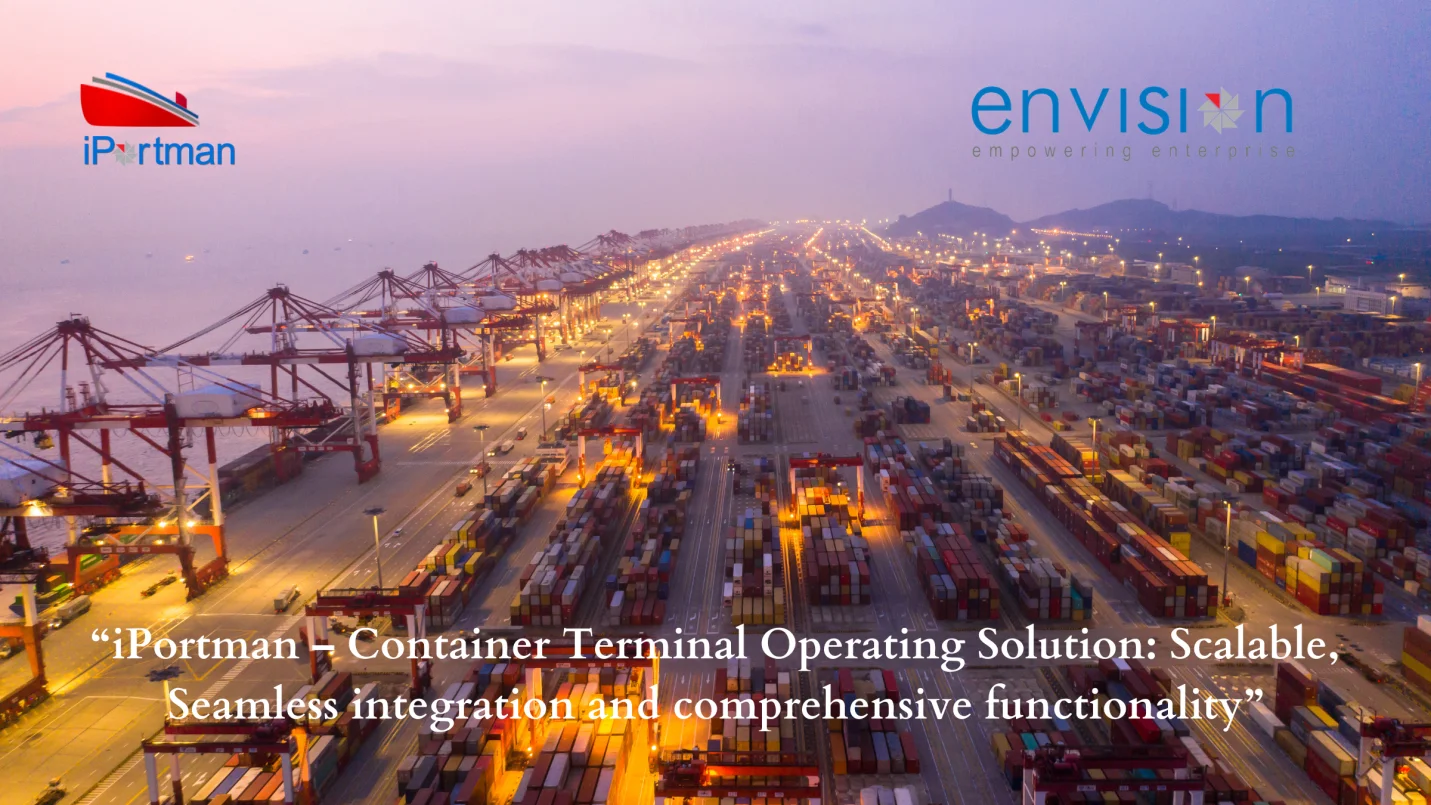
Next-Generation Container Terminal Operating Systems in 2026: AI, Cloud, Digital Twin & Sustainable Port Operations
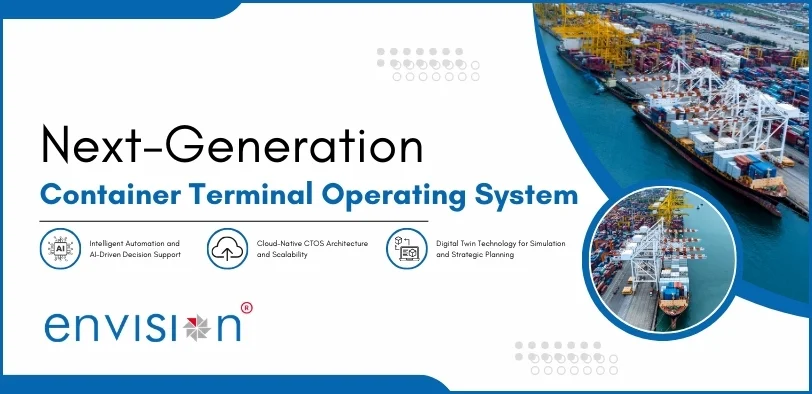
Table of Contents
Introduction: The Evolution of Container Terminal Operating Systems in 2026
The Strategic Importance of Next-Generation Container Terminal Operating Systems (CTOS)
Trend 1: Intelligent Automation and AI-Driven Decision Support
Trend 2: Real-Time Visibility Through IoT and Sensor Fusion
Trend 3: Digital Twin Technology for Simulation and Strategic Planning
Trend 4: Cloud-Native CTOS Architecture and Scalability
Trend 5: Seamless Integration with Ecosystem Partners
Trend 6: Sustainability and Green Port Operations
Trend 7: Cybersecurity and Operational Resilience
Envision CTOS: A Benchmark for Modern Terminal Orchestration
Conclusion: Building Competitive Advantage with Intelligent CTOS in 2026
Introduction
The global port and container terminal landscape is still undergoing transformative evolution in 2026. The future generation of Container Terminal Operating Systems (CTOS) has become a key driver of change in the contemporary port operations due to the technological innovation, the changing dynamics of trade, the demand of sustainability, and the increasing pressure towards efficiency and resilience. To C-level executives of ports and terminals, to market researchers following the digitization of the logistics industry, as well as to industry stakeholders seeking strategic direction, the key points that define the implementation of CTOS should be considered in the future.
The article provides insights into the significant forces behind next-genCTOS solutions in 2026, the fundamental capabilities that will re-invent terminal automation and orchestration, and the implications of these solutions to global supply chains. It also analyzes how operators will be able to unlock operational excellence, be more resilient to disruptions, and be able to achieve both sustainability and profitability by utilizing smart digital transformation.
The Strategic Importance of Next-Generation CTOS
Container Terminal Operating Systems serve as the core orchestration layer that handles all the terminal operations, planning of vessels and yardmanagement to gate work and equipment dispatching. The development of CTOS indicates the growth of the complexity of port industries, additional multi-directionality of cargo flows, the presence of more than one mode of connection, narrowing the window of berths and enhanced performance measurement requirements.
The CTOS solutions of 2026 do not work as mere transaction processing or schedule engines anymore; they are a strategic platform that incorporates real-time data, machine intelligence, automated equipment control, and advanced analytics. They act as the glue between the past hardware, Internet of Things (IoT) sensors, autonomous equipment fleets, third-party logistics partners, carriers, regulators, and customers.
The choice and application of an appropriate CTOS is a strategic investment decision at the frontline of modernizing ports. The new generation of CTOS is projected to provide quantifiable improvements in terminal throughput, equipment, turnaround times and customer satisfaction in addition to providing compliance, safety and environmental performance.
Trend 1: Intelligent Automation and AI-Driven Decision Support
The combination of machine learning and Artificial Intelligence (AI) into CTOS platforms can be considered the key trend of the next generation. The classic rule based scheduling is being replaced by adaptive and data driven optimization engines that have the ability to continually learn on the basis of operational trends.
Intelligent automation willbe implemented in 2026 in:
Berth and vessel scheduling: AI optimizes vessel sequencing and distribution of the pilot and tug resources depending on the past situation, real-time weather conditions, and forecasted workloads.
Optimization of yards and storage: ML models can be used to predict the time that a particular container will be in the area, indicating optimal ways to stack it so that re-shuffling is minimized and the yard is run more smoothly.
Equipment dispatch and routing: AI proposals coordinate autonomous guided vehicles (AGVs), automated stacking cranes (ASCs), and smart rubber-tyred gantries (RTGs), and reduce empty travels and wait time.
Exception management and anomaly detection: CTOS systems process AI to identify new bottlenecks, indicators of equipment deterioration, or deviation in the workflow before it becomes a delay costing a significant sum of money.
To executives, smart CTOS capabilities will be the capacity to realize considerably reduced operation expenses, throughput increase with no extra capital expenditure, and react dynamically to peak demands or interruptions.
Trend 2: Real-Time Visibility via IoT and Sensor Fusion
In 2026, terminal operators will rely on real-time operational visibility at an unprecedented level. The development of IoT sensors, RFID tags, GPS trackers, and wireless connectivity has provided a condition in which all container movements, equipment rotations, and gate transactions are constantly reported.
Next-gen CTOS uses this sensor data by using advanced sensor fusion and data ingestion algorithms. Such systems collect data of disparate streams, such as crane load cells, environmental sensors, gate cameras, chassis trackers, and yard RFID readers, into a unified operational dashboard.
The main advantages of the real-time visibility are:
Shorter dwell times: Container location awareness enables decisions to be made fast.
Better throughput: live monitoring of equipment use guarantees a smoother distribution of the tasks.
Incident response: The operators are able to implement a response in real time to unsafe conditions or failure of equipment.
Digital twin integration: Digital twins are simulated and predicted through real time data being fed into a digital twin model reflecting terminal operations.
To market researchers, this trend represents a change in reporting periodically and using fixed KPI's to real-time dynamic performance insights serving as inputs to strategic decisions.
Trend 3: Digital TwinTechnology for Simulation and Planning
Digital twin technology is out of the innovation laboratories and into the regular CTOS applications. A digital twin is a simulated representation of a terminal environment that is operationally close to the actual environment. Digital twins are used in 2026 as a planning and testing environment to do scenario analysis, capacity expansion planning, what-if simulations and contingency rehearsals.
A container terminal digitaltwin will have:
Physical infrastructure andfacilities: Berths, yard blocks, cranes, vehicles.
Operational processes: Gate processing, loading/unloading of vessels, repositioning of the yard, inter-mode handoffs.
Weather conditions: The weather, low tides and busy times of the day.
With integration into the CTOS, the executives are able to simulate scenarios like:
- Seasonal demand peaks because of surges in peak volume.
- Malfunctions of equipment and backup plans.
- Infrastructure modifications, i.e. the opening of new berths.
The distribution of the workforce in case of emergency.
This virtual testing of strategies before practical deployment minimizes risk to a large extent and makes better capital investment decisions.
Trend 4: Cloud-Native Architecture and Scalability
The old CTOS platforms are characterized by stiff architectures, which reduce scalability and performance. By comparison, the upcoming generation of CTOS platforms is becoming more cloud-native.
This architecture has a variety of benefits:
Elastic scalability: Cloud infrastructure is able to serve changing workloads without on-site hardware requirement.
Frequent updates: Customers of software can implement updates, patches, feature additions quickly without interrupting the service.
Distributed access: Web interfaces and APIs enable stakeholders in the global organizations to gain access to the operational insights in a secure manner.
Resilience and redundancy: Cloud platforms are highly available and have disaster recovery capabilities in nature.
The cost of owning the terminals is also minimized with the adoption of the cloud where by the capital costs are reflected on operation subscriptions and reduction in the necessity of having on-premises data centers.
In the case of C-level executives, the use of cloud-native CTOS platforms is a strategic move that will allow them to be agile over the long term and operate in ways that are not vulnerable to technological obsolescence.
Trend 5: Seamless Integration with Eco-system Partners
The modern supply chain is very inter linked. Terminals must interface seamlessly with the carriers, inland transport providers, freight forwarders, customs, ports community systems (PCS), and other stakeholders. Next generation CTOS focuses on open API's and uniform data exchange standards like ISO 28005 of RFID and ISO 10303 of data sharing.
Integrated eco-systems provide:
Quickly clear shipments: Paper work and inspection delays are minimized as the data flows are automated.
Better multimodal coordination: Vessel, truck and rail operations are connected smoothly in real-time,with the visibility of handoff.
Improved customer service: Carriers and cargo owners are updated through the use of portals and automated notifications.
Traceability with block chain: Part of the terminals are using block chain or distributed ledger technologies to create immutable records of transactions and additional trust between partners.
This trend is on par with the industry trend of increasing collaboration across the logistics platforms that optimize the throughput but reduce friction across the supply chain.
Trend 6: Sustainability and Green Operations
Sustainability is no longer a peripheral issue but one of the primary strategic priorities of terminal operators and ports. Green operations are motivated by regulatory pressures, expectations of customers and corporate responsibility commitments. The next-gen CTOS platforms are added by facilitating:
Emissions monitoring and reporting: Sensor network integration and equipment telemetry offers finer greenhouse gas information.
Energy optimization: Smart dispatch systems cut down on unproductive idleness of diesel-powered equipment and propose greener solutions.
Electric fleet preparedness: CTOS will be able to schedule the charging of electric trucks and regulate the consumption of energy at peak and off-peak hours.
Shore power and crane electrification: This involves in corporation with power distribution systems in order to achieve optimum use of cleaner energy sources.
The ports that take the initiative to incorporate sustainability metrics into their CTOS schemes become distinct in the eyes of shippers who have environmental requirements.
Trend 7: Cybersecurity and Resilience
With more digitalization in ports, they also get more vulnerable to cyber crimes. Cybersecurity becomes a critical board-level concern and CTOS solutions will be integrated with sophisticated security architectures to secure critical infrastructure.
Notable cybersecurity characteristics are:
Zero-trust access control: On-going authentication of user identities and hard boundaries of privileges.
Data encryption in transit and at rest: Data security of sensitive cargo and customer data.
End point detection andresponse (EDR): Surveillance and counter measures against suspicious activity within the network of connected devices.
Backup of operations and protection of fail over: Guarantees backup incase of cyberattacks.
In the case of top management, cybersecurity is a mandatory component of the vendor assessment and operational risk management systems. Adherence to standards of ISO/IEC 27001 and NIST cybersecurity framework improves continuity and credibility.
EnvisionCTOS: A Benchmark for Modern Terminal Orchestration
Envision CTOS is a next-generation Container Terminal Operating System that has established itself as a benchmark for modern terminal coordination. Envision CTOS is based on a cloud-native design and is a convergence of intelligent automation and real-time sensor data over advanced scheduling algorithms to provide a complete operational command center.
The Envision CTOS has key attributes:
Scheduling and optimization using AI: The proprietary machine learning engines of Envision can suggest the workload sequences that lead to the highest berth productivity and the lowest number of container touches.
Modular and scalable design: The design of Envision CTOS enables operators to implement modules step by step: starting with yard orchestration and gate management, and moving to automated equipment control, minimizing the risk and allowing step-by-step transformation.
Open API eco-system: End-to-end visibility is improved through the seamless integration of the carriers, inland transport systems, customs platforms and IoT sensor networks.
Digital twin compatibility: The ability to facilitate a digital twin environment allows Envision to allow the executive to simulate operational strategies, test investment scenarios, and plan infrastructure improvements without disrupting live operations.
Sustainability analytics: EnvisionCTOS will include emissions monitoring and energy consumption dashboard which will facilitate environmental reporting and sustainability optimization.
Co-operative cybersecurity infrastructure: A set of in-built security mechanisms and real-time surveillance systems protect business continuity in the changing times of heightened cyberattacks.
Envision CTOS is reflective of next-generation CTOS systems not beingmerely software applications but rather operation enablement systems that can be used to produce real business deliverables like improved throughput, enhanced resource optimization and customer experiences.
Conclusion
Intelligent, connected and resilient CTOS solutions are defining the future of container terminal operations in 2026. These platforms have much moret han transactional purposes; they are the drivers of strategy that allows realtime orchestration, data-driven decision support and operational efficiency, sustainability, and supply chain integration.
The implementation of next-generation CTOS is not only a requirement in the operations of C-level executives but also a competitive edge. The trends in the industry, including AI-based automation, cloud-native architectures, digital twin, sustainability analytics, integrated ecosystems, and strong cybersecurity systems, have become leading standards in technology assessment and investment.
EnvisionCTOS Container Terminal Operating System is one of the solutions that prove how current CTOS can meet the demands of those it is a versatile solution with profound analytical power, full integration, and an architecture that is future-oriented.
Those ports and terminals that adopt these trends will not only be in a better position to survive in an ever competitive world market but also dominate it. The decision to upgrade terminal operating systems in the present day will determine the future of competition in the future, as some ports have the ability to provide global trade networks with the world-class performance, resilience, and value.
Future-proof your containerterminal with Envision Container Terminal Operating System (CTOS). Schedule a demo to unlock smarter operations,higher throughput, and long-term operational resilience.
Talk to us today to know how our solutions can accelerate your digital transformation
Let's Talk

.webp)

.webp)
.webp)
.webp)

%20ver1_1.webp)


.png)






.webp)